Why Indian hospitals need a HIMS, and why research needs one too
What a HIMS changes for Indian hospitals: safer medicines, cleaner billing, NABH audits, ABDM and ABHA readiness, and research-ready data.
On this page
In short: A hospital information management system (HIMS) cuts medication errors, repeat tests and queues by putting every department on one record. In India it is also how hospitals meet NABH audits, ABDM and ABHA, and insurance claim trails, and it makes care data usable for research.
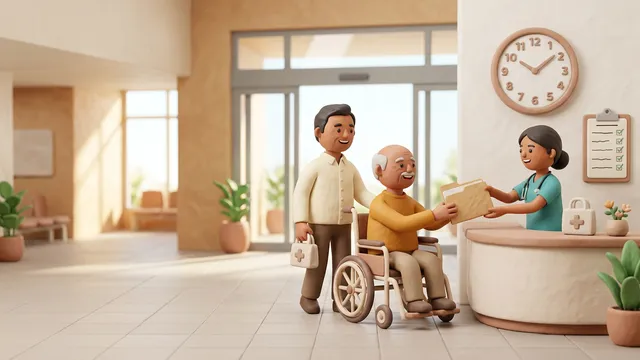
The scene below is illustrative. It is a composite, not a real patient or hospital.
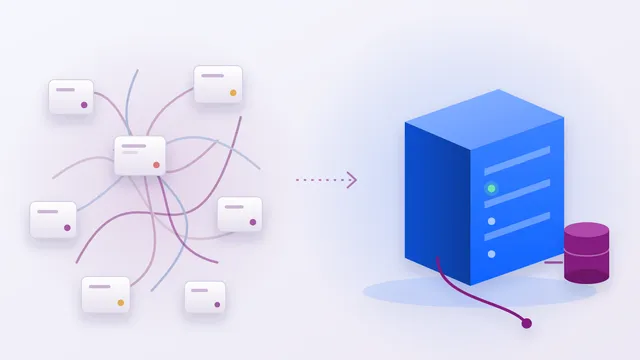
It is 9.40 on a Monday morning at a 120-bed hospital in a district town. The registration counter has a queue out of the door, and each patient is giving their name, age, address and phone number again, because last year’s file is in a cupboard nobody can find. Upstairs, a physician orders a creatinine that was done two days ago — the report is on paper in another ward. A discharge planned for 11 is still waiting at 4, because the bill has to be built by hand from charge slips, and two of them are missing. Nobody in this story is careless. The system they work in is made of paper, and paper forgets.
A hospital information and management system (HIMS) is the software that replaces that paper: registration, OPD, wards, orders, pharmacy, lab, radiology, billing and records, on one patient identity. This article is about what a HIMS actually changes, why India needs it now, and why the same system is the foundation for research that Indian medicine badly needs.
What a HIMS actually changes
The case for hospital information systems is not new. The Institute of Medicine’s To Err Is Human (2000) reported expert estimates that as many as 98,000 people a year died from medical errors in US hospitals, and concluded that the problem is mostly good people working in bad systems. Its follow-up, Crossing the Quality Chasm (2001), set six aims for care — safe, effective, patient-centred, timely, efficient and equitable — and named information technology as one of the levers to get there. The evidence since then is specific.
Fewer medication errors
In a landmark study at a Boston teaching hospital, computerised physician order entry (CPOE) with dose, allergy and interaction checks cut non-intercepted serious medication errors by 55% (Bates et al., JAMA, 1998). A later meta-analysis estimated that an order placed through CPOE is 48% less likely to contain an error than a paper order (Radley et al., JAMIA, 2013). The same authors note that fewer errors do not automatically mean less harm, and well-designed checks matter more than the screen itself.
Fewer repeat tests
When the last result is visible at the moment of ordering, clinicians repeat less. In one emergency department, a simple visual cue in the electronic ordering screen was followed by a 49% fall in unintentional duplicate lab orders (Horng et al., JAMA Network Open, 2019). For patients paying out of pocket, every avoided repeat test is money saved.
Shorter queues
Indian evidence is growing. At a teaching hospital in Agra, patients who registered online with ABHA took an average of 4.15 minutes, against 10.37 minutes at the conventional counter — a small, single-site study, but a clear direction (Ranjan et al., Cureus, 2025). The government reports that ABHA-based Scan and Share registration has issued over 23.21 crore queue tokens as of 18 June 2026 (PIB, July 2026).
What else changes, day to day
Not every benefit has a randomised trial behind it, but administrators will recognise these:
- Patient identification. One identity per patient, with two identifiers on every wristband, label and report — the first of the international patient safety goals that NABH and JCI audit against.
- Billing integrity. Charges are captured where the service happens — the lab, the pharmacy, the OT — instead of being reconstructed from slips at discharge. Leakage and disputed bills both fall.
- Bed management. A live view of which beds are occupied, being cleaned or free, instead of a phone round of the wards.
- Audit readiness. When every order, administration and signature carries a time and a name, an NABH assessment becomes a report you run, not a month of file-pulling.
- Turnaround times. Order-to-result and admission-to-discharge times can only be improved once they are measured.
Why India needs this now
The workload is enormous, and mostly private
India has 13,88,185 registered allopathic doctors and 7,51,768 registered AYUSH practitioners; the government’s estimate of a 1:811 doctor-population ratio assumes 80% of both groups are available (PIB, February 2026). Those doctors see very large volumes, and much of that care happens outside government hospitals: in the NSS 75th round (2017-18), public hospitals treated only 46% of hospitalised cases in rural areas and 35% in urban areas (MoSPI, 2019). The private and trust hospitals that carry the rest are where digital systems will make the most difference — and where adoption is most uneven.
The national digital rails now exist
The Ayushman Bharat Digital Mission (ABDM) has built the public infrastructure a HIMS plugs into:
- ABHA, the patient’s health ID. Over 104 crore health records are linked to over 93 crore ABHA accounts (PIB, July 2026).
- The Health Facility Registry and Healthcare Professionals Registry. As of 12 December 2025, about 4.42 lakh facilities and 7.47 lakh professionals were registered (MoHFW, December 2025).
- The National Health Claims Exchange (NHCX), a common digital channel for insurance claims between hospitals, insurers and payers (PIB, July 2026).
- The Digital Health Incentive Scheme (DHIS). Under the November 2025 terms, hospitals earned Rs 20 per eligible health record linked to a KYC-verified ABHA, above 100 such records a month, for November 2025 to March 2026 (NHA, 2025). By 18 June 2026, hospitals had been paid over Rs 107 crore (PIB, July 2026). Check the ABDM site for the terms in force today.
Software integration with ABDM is usually described in milestones: M1 (creating and verifying ABHA), M2 (acting as a health information provider, linking records so patients can share them with consent) and M3 (acting as a health information user, fetching records a patient has consented to share). A hospital without a HIMS that does these steps cannot take part in any of it.
Insurance, PM-JAY and the claim trail
As of 1 December 2025, PM-JAY had issued about 42.48 crore Ayushman cards and authorised 10.98 crore hospital admissions worth Rs 1.60 lakh crore (MoHFW, December 2025). Every one of those admissions needs pre-authorisation, documents and a clean claim. A hospital that builds its claim from structured clinical and billing data gets paid faster and argues less.
The law now expects it
The Digital Personal Data Protection Act, 2023 applies to every hospital that holds patient data. Its Rules were notified on 14 November 2025 with an eighteen-month phased compliance period, and the highest penalty — up to Rs 250 crore — applies to failing to keep reasonable security safeguards (PIB, November 2025). Consent notices, breach reporting and access controls are very hard to prove on paper.
Accreditation is moving the same way. In September 2024 NABH published its first Digital Health Standards for HIS/EMR systems, and a product needs a valid ABDM M3 compliance certificate and at least three live hospital deployments to apply (NABH, 2024).
Why research in India — and why it needs efficient tools
India’s research output does not match the size of its population or its illness. India has nearly 20% of the world’s population but hosts only about 1.5% of global clinical trials (Cherian et al., Communications Medicine, 2025). Of trials registered in India’s CTRI from 2007 to 2014, only 18% studied the ten conditions causing 68.3% of deaths (Kaur et al., 2020). An analysis of 579 Indian medical institutions found that 332 medical colleges (57.3%) published no research paper between 2005 and 2014 (as summarised in J Postgrad Med, 2016).
The reasons are many — time, funding, training, incentives. But one reason is practical and fixable: the data from everyday care is not usable. Every Indian hospital sees thousands of patients a month with diabetes, TB, hypertension, dengue, trauma and high-risk pregnancy. That is real-world data of great value. On paper, or in free-text fields, it is almost impossible to count, compare or follow over time. A postgraduate student writing a thesis — required of MD and MS students under the NMC’s PGMER-2023 (Careers360, 2024) — can spend months pulling files by hand to collect a few hundred cases.
What “research-ready” care data means
Data from routine care becomes usable for research when it is:
- Structured. A blood pressure is two numbers in fields, not a phrase in a note.
- Coded. Diagnoses in ICD-10 or ICD-11, lab tests in LOINC, clinical findings in SNOMED CT — so “MI”, “heart attack” and “STEMI” count as the same thing across departments and hospitals.
- Consented. Patients know how their data may be used, and consent is recorded rather than assumed, in line with the DPDP Act.
- De-identifiable. Names, phone numbers and ABHA numbers can be removed or replaced before data leaves the clinical team.
- Auditable. Every access to the data is logged, so an ethics committee can see who looked at what.
This matters for ethics approval. ICMR’s national guidelines allow an ethics committee to waive consent for retrospective studies where participants are de-identified or cannot be contacted, provided the research carries less than minimal risk (ICMR, 2017, section 5.7). A system that can de-identify cleanly and prove who accessed what makes that case far easier to make — and far safer for patients.
Why research and hospital management belong together
It is tempting to treat research as something a medical college does, separate from running the hospital. In practice the same system produces both. The order a doctor places to treat a patient is the same record a researcher later counts. If the ward system is poor, the research is poor.
The Institute of Medicine called the goal a learning health system: one in which the information generated by care is captured and fed back to improve care (Best Care at Lower Cost, 2013). For an Indian hospital, that loop looks ordinary:
- The infection-control nurse sees surgical-site infection rates by surgeon and procedure every month, not once a year.
- The pharmacy committee sees antibiotic use by ward and changes the formulary.
- A department runs a registry — for stroke, snakebite, or high-risk pregnancy — straight from the records it already keeps.
- A teaching hospital gives every PG student a de-identified, coded dataset to start from, with ethics approval built into the request.
Management gets better numbers, clinicians get better feedback, and research becomes a by-product of good care instead of a separate project.
What to look for in a HIMS
A vendor-neutral checklist for hospital owners, CEOs and medical directors:
- ABDM integration. Which milestones (M1, M2, M3) are certified today, and which are in progress? Ask for the certificate, not the brochure. Ask about NHCX for claims.
- NABH support. Does it capture what assessors check — two-identifier patient ID, medication reconciliation, consent, high-alert drugs, falls, infection control, incident reporting?
- Coding standards. ICD for diagnoses, LOINC for labs, SNOMED CT for clinical terms, and FHIR for exchange.
- Your data, your exit. Can you export everything, in open formats, without paying the vendor? Who owns the data in the contract?
- Access control and audit trail. Role-based access, with every view and change of a patient record logged — essential under the DPDP Act.
- Downtime and connectivity. What happens when the internet fails in a district town? Can wards keep working and sync later?
- Languages. Can staff and patients use it in the languages they speak?
- Research features. De-identified export, registries, cohort queries, consent records — especially if you are, or plan to become, a medical college.
- Total cost. Licence, implementation, hardware, training, support and upgrades over five years, not just the first-year price.
How MedBrains approaches this
MedBrains is a hospital information and management system built for Indian hospitals and medical colleges. It covers OPD, IPD, nursing, pharmacy, lab, radiology and billing on one patient record, with clinical notes kept on a single case sheet rather than scattered across modules. It is built to integrate with ABDM milestones M1 to M3 and with NHCX, and to support NABH workflows such as patient identification, medication safety checks and audit trails. Clinical data is coded with SNOMED CT, LOINC and ICD, so it can serve quality improvement and research as well as care. Staff can work in multiple languages, and the native mobile apps are designed to keep working through patchy connectivity.
We would rather you choose any good system than stay on paper. If you would like to see how MedBrains handles the checklist above, we are happy to walk you through it.
Further reading
- Shortliffe EH, Cimino JJ (eds). Biomedical Informatics: Computer Applications in Health Care and Biomedicine, 5th edition. Springer, 2021 (publisher) — the standard reference text for the field, from records to standards to decision support.
- Wager KA, Lee FW, Glaser JP. Health Care Information Systems: A Practical Approach for Health Care Management, 5th edition. Wiley, 2022 (publisher) — written for managers; this edition moves from adopting systems to using their data well.
- Hersh W (ed). Health Informatics: Practical Guide, 8th edition, 2022 (book site) — a readable introduction for clinicians and IT staff.
- Coiera E. Guide to Health Informatics, 3rd edition. CRC Press, 2015 (review) — includes a full section on language, coding and classification, the heart of research-ready data.
- Institute of Medicine. To Err Is Human (2000), Crossing the Quality Chasm (2001) and Best Care at Lower Cost (2013) (National Academies Press) — the three reports that shaped how the world thinks about safety, quality and learning health systems.
- Sakharkar BM. Principles of Hospital Administration and Planning, 2nd edition. Jaypee (publisher) — a widely used Indian text on hospital administration.
- Kunders GD. Hospitals: Facilities Planning and Management. Tata McGraw-Hill, 2004 (library record) — an Indian reference on hospital planning and operations.
This article is general information for hospital leaders, not medical, legal or financial advice. Government schemes and rules change; check the official ABDM, NABH, NMC and MeitY websites for the current position.
Frequently asked questions
What is the difference between a HIS, an EMR and a HIMS?
An electronic medical record (EMR) holds clinical information about patients. A hospital information system (HIS) or HIMS is broader: it runs the hospital's operations — registration, beds, orders, pharmacy, lab, billing and reports — around that clinical record. NABH now publishes separate standards for both (NABH, 2024).
Is ABDM integration mandatory for private hospitals?
Joining ABDM is voluntary for facilities, but it is increasingly tied to incentives, insurance claims and accreditation. For example, NABH's HIS/EMR certification requires a valid ABDM M3 compliance certificate (NABH, 2024).
What does the Digital Health Incentive Scheme pay for?
It pays facilities for digital health records linked to patients' ABHA. Under the terms for November 2025 to March 2026, hospitals earned Rs 20 per eligible record linked to a KYC-verified ABHA above 100 a month (NHA, 2025). Check abdm.gov.in for the current terms.
Can hospital records be used for research without asking every patient?
Sometimes. ICMR guidelines let an ethics committee waive consent for retrospective studies where participants are de-identified or cannot be contacted, and the risk is less than minimal (ICMR, 2017). The decision belongs to the ethics committee, not the hospital or the vendor.
How does the DPDP Act affect hospital software?
Hospitals hold personal data and must give clear notice, take consent where required, keep reasonable security safeguards and report breaches. Penalties for failing to keep safeguards go up to Rs 250 crore (PIB, 2025). Software should make these duties easy to meet and to prove.
Sources
- Bates DW et al. Effect of computerized physician order entry and a team intervention on prevention of serious medication errors. JAMA, 1998 doi.org
- Radley DC et al. Reduction in medication errors in hospitals due to adoption of computerized provider order entry systems. JAMIA, 2013 pmc.ncbi.nlm.nih.gov
- Horng S et al. Unintentional duplicate orders before and after a visual aid in the EHR. JAMA Network Open, 2019 pmc.ncbi.nlm.nih.gov
- Ranjan A et al. Online versus conventional OPD registrations at a tertiary care hospital. Cureus, 2025 pmc.ncbi.nlm.nih.gov
- Institute of Medicine. To Err Is Human: Building a Safer Health System, 2000 nationalacademies.org
- Institute of Medicine. Crossing the Quality Chasm, 2001 nationalacademies.org
- Institute of Medicine. Best Care at Lower Cost: The Path to Continuously Learning Health Care in America, 2013 nationalacademies.org
- PIB. Ayushman Bharat Digital Mission: India's digital health backbone (6 July 2026) static.pib.gov.in
- MoHFW. Initiatives and achievements 2025 (PIB, December 2025) static.pib.gov.in
- NHA. Digital Health Incentive Scheme, Corrigendum 6 (20 November 2025) abdm.gov.in
- NABH. Digital Health Standards for HIS/EMR Systems, 1st edition (September 2024) nabh.co
- PIB. Update on health workforce availability (10 February 2026) pib.gov.in
- MoSPI. Key indicators of social consumption in India: Health, NSS 75th round (2017-18) mospi.gov.in
- MeitY. The Digital Personal Data Protection Act, 2023 meity.gov.in
- PIB. DPDP Rules, 2025 notified (17 November 2025) static.pib.gov.in
- Cherian JJ et al. Increasing early phase clinical trials capacity in India. Communications Medicine, 2025 pmc.ncbi.nlm.nih.gov
- Kaur R et al. Relationship between clinical trials and disease burden of India. J Pharm Bioallied Sci, 2020 pmc.ncbi.nlm.nih.gov
- Tullu MS, Karande S. Quality research in Indian medical colleges and teaching institutions. J Postgrad Med, 2016 pmc.ncbi.nlm.nih.gov
- ICMR. National Ethical Guidelines for Biomedical and Health Research Involving Human Participants, 2017 ethics.ncdirindia.org
- Careers360. NMC clarifies thesis requirement for PG medical students (2024) news.careers360.com
- Shortliffe EH, Cimino JJ (eds). Biomedical Informatics, 5th edition. Springer, 2021 link.springer.com
- Wager KA, Lee FW, Glaser JP. Health Care Information Systems, 5th edition. Wiley, 2022 wiley-vch.de
- Hersh W (ed). Health Informatics: Practical Guide, 8th edition, 2022 dmice.ohsu.edu
- IEEE EMBS Pulse. Review of Coiera, Guide to Health Informatics, 3rd edition (CRC Press, 2015) embs.org
- Sakharkar BM. Principles of Hospital Administration and Planning, 2nd edition. Jaypee jaypeebrothers.com
- Kunders GD. Hospitals: Facilities Planning and Management. Tata McGraw-Hill, 2004 (library record) opac.cb.amrita.edu